Yarder or skidder? Reading the ground signs on a steep-slope show
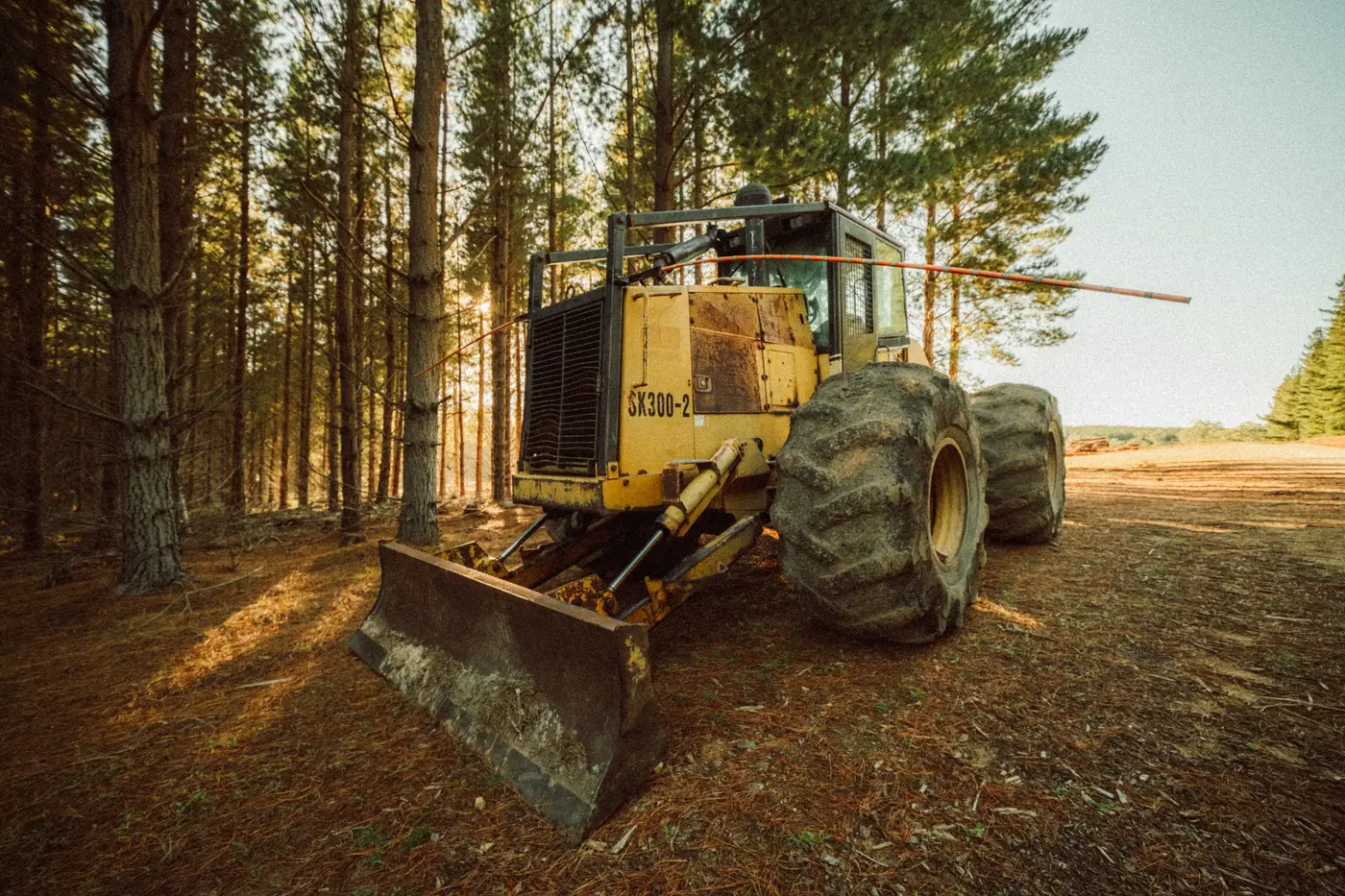
You pull up to a block on a mountain unit and the permit says "ground-based or cable, contractor's choice." That's not much to go on when you're trying to figure out who's running what before you drive two hours up a haul road. The good news is a steep-slope show gives itself away fast, if you know where to look.
What the landing tells you
Start at the landing, because that's where the system declares itself before you ever walk the unit. A cable yarder show has a tower, a guyline fan running back to stump anchors, and a carriage sitting on the skyline when it's not running. You'll usually see a cold deck of logs stacked tight and square, because everything's coming down one corridor at a time and the processor or loader is working off a narrow footprint. No wide skid trail braids into the landing. Instead you get one or two cleared lanes where the corridor meets the deck, cut straight up the fall line.
A ground-based skidder show looks different from fifty yards out. The landing is wider and messier, logs coming in from several directions because a skidder or two is working multiple trails at once. You'll see braided skid trail scars fanning into the unit, not single lanes, and the deck itself tends to be looser and longer rather than square, because the loader is working off whatever order the skidder happened to bring wood in. If there's a dozer or excavator building trail as it goes, you'll see fresh sidecast and berm along the trail edges that a cable corridor never leaves.
Corridors versus trails
The clearest tell once you're past the landing is corridor spacing versus trail density. Cable yarding equipment runs in corridors, straight lines cut through the stand, usually spaced on a regular interval because the yarder's reach off the skyline sets how far apart they need to be. From above or from a ridge across the draw, a cable unit reads as a series of parallel stripes. Ground-based skidding equipment doesn't need that discipline. A skidder goes where the ground lets it, so the trail network looks organic, curving around benches and avoiding the steep pitches a cable system would just span overhead.
Slope is the other giveaway, and it's usually the first thing a sales rep learns to read. Anything over roughly 40 percent and skidders start struggling for traction and tipping risk goes up fast, which is exactly the terrain cable systems exist for. If the unit you're looking at is pitched steep enough that you wouldn't want to drive a loaded truck across it sideways, odds are good there's a yarder up there, not a grapple skidder. Flatter benches and gentler ground inside the same permit boundary, on the other hand, often get logged ground-based even on a job that's cable everywhere else, because there's no reason to rig a corridor over ground a skidder can just drive.
Counting machines from what's moved
Once you know which system is running, counting iron gets easier because each system has a signature crew size. A cable show usually means a yarder, a carriage, a loader or processor at the landing, and sometimes a chaser working chokers down in the unit. A ground-based show means one or more skidders cycling the unit, a loader at the deck, and often a dozer or feller-buncher if it's a mechanized ground crew. Knowing the system first tells you what machine count to expect before you ever see a single piece of equipment, which matters when you're trying to figure out if a contractor's running one skidder or three off the same landing.
That's the piece that's hard to get from a drive-by or a single site visit: knowing which blocks went live this month and roughly what's working them, across a whole region, without burning a day on every forest road. Forestry Machine Census runs a monthly pass over active cutblocks and roadside landings and hands back a list with machine counts by type, which is a faster way to get a monthly read on which cutblocks are live than chasing it unit by unit.
If you'd rather get that list than keep driving haul roads to find it, Forestry Machine Census is built for exactly that.