What is a hoe chucker, and how is it different from a dedicated skidder?
Hoe chuckers come up a lot in cruiser talk and crew gossip, but the term confuses folks who learned their equipment list from a dealer brochure. A hoe chucker is an excavator, usually a mid-size to large trackhoe, running a thumb or a grapple instead of a bucket, put to work moving wood from the stump toward the landing instead of digging. The machine didn't come from the factory built for wood moving. Somebody put it on this job because the ground, the terrain, or the harvest plan called for it.
What a hoe chucker actually does
On a cut, a hoe chucker sits in one spot or walks short distances and swings logs or tree-length wood toward a road, a landing, or a pile where a loader or another hoe can pick it up. It doesn't travel the full distance between stump and deck the way a skidder does. It chucks wood along in stages, repositioning every so often and passing the load to the next machine in the chain, sometimes another hoe, sometimes a swing-boom loader at roadside.
This setup shows up most on steep ground, in wet bottomland where a skidder would rut out fast, or on small thinning jobs where a contractor doesn't want to mobilize a full skidding unit. A lot of cable-assisted and steep-slope operations run a hoe chucker uphill from a yarder or a tethered feller, staging wood for the next pull. Some crews run a hoe chucker simply because it's an excavator they already own from site work or road building, and bolting a log grapple onto it costs less than bringing in a dedicated skidding machine.
How that's different from a dedicated skidder
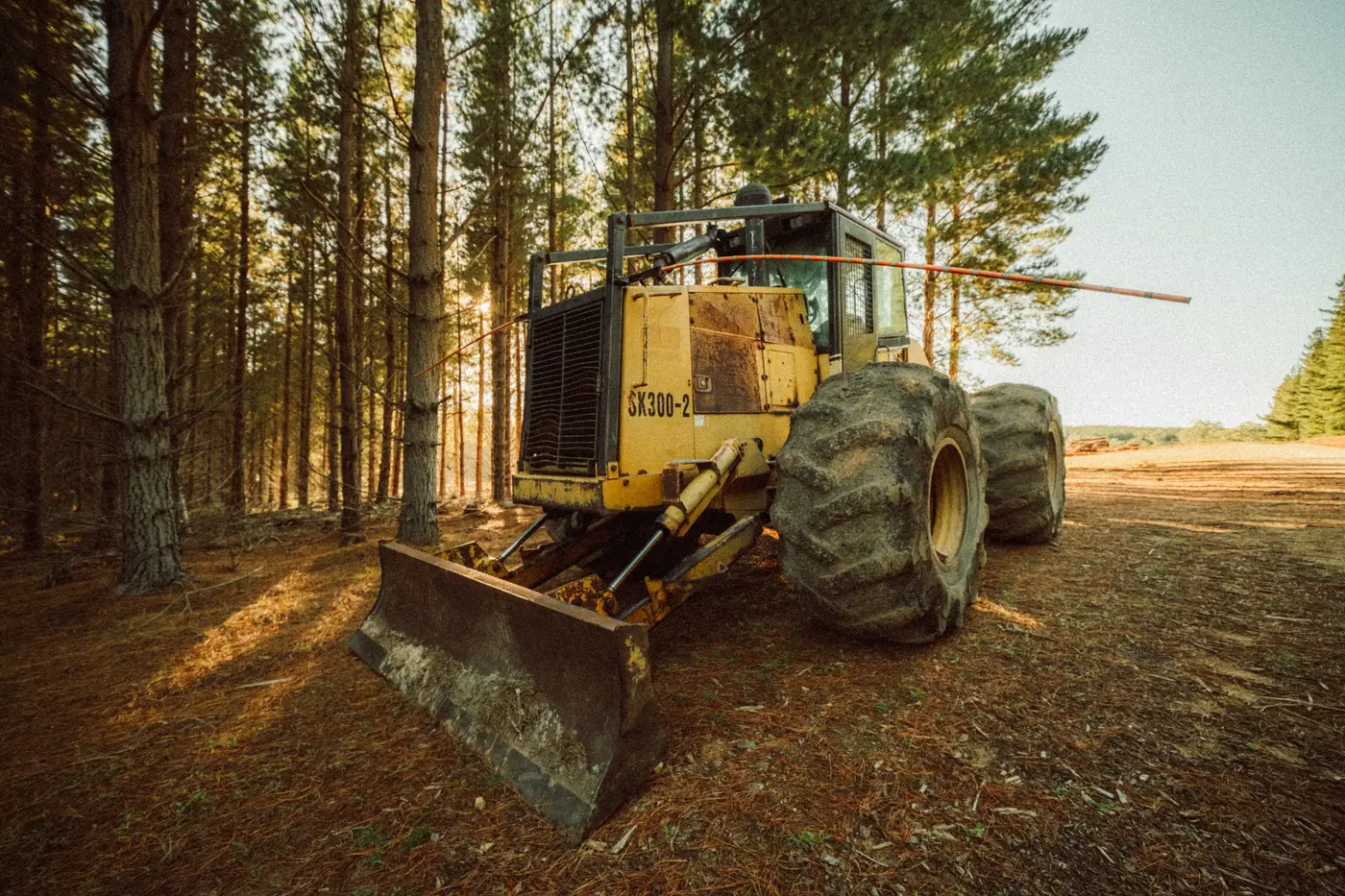
A dedicated skidder gets built from the ground up for one job: dragging a full turn of logs across real distance, stump to landing, all day long. Rubber-tired or tracked, it runs a winch or a grapple off the back, a high-clearance frame for straddling slash and stumps, and a drivetrain sized for repeated pulls under load. A grapple skidder backs up to a bunch, closes the arch, and hauls the turn out in one run, then drives back for the next one. Covering ground is what the drivetrain is sized to do, pull after pull, for the length of a shift.
A hoe chucker doesn't drag wood across the ground that way. It picks a load up and swings it, then sets it down closer to where it needs to go. The reach of the boom does the work a skidder's drivetrain does. On flat, open ground a skidder usually moves more wood faster, because it covers distance a hoe chucker can't close in a single swing. On tight, wet, or steep ground, the hoe chucker keeps working where a skidder would bog down or tear the site up trying.
Why this matters if you're counting machines on a block
If you're tracking which contractors are actually cutting and what they're running, hoe chucker versus skidder isn't trivia. A crew running two hoe chuckers and a loader instead of a skidder and a loader is a different fleet mix, and it tells you something about the ground they're working and what equipment that contractor might need next. From an aerial or satellite pass, a trackhoe parked at a landing with a grapple attachment can look close to a hoe chucker working mid-slope, and either can get mislabeled as a feller-buncher or a loader if you're not watching the attachment and the work pattern across a few passes.
This site tracks a monthly list of active cutblocks with the harvesters and forwarders on each one counted and sorted by type, built so a sales rep can tell a hoe chucker operation from a dedicated skidder operation without driving the haul road to find out.
If you'd rather have that list land in your inbox every month than piece it together from word of mouth, get in touch.