How to tell a delimber from a processor head in satellite imagery
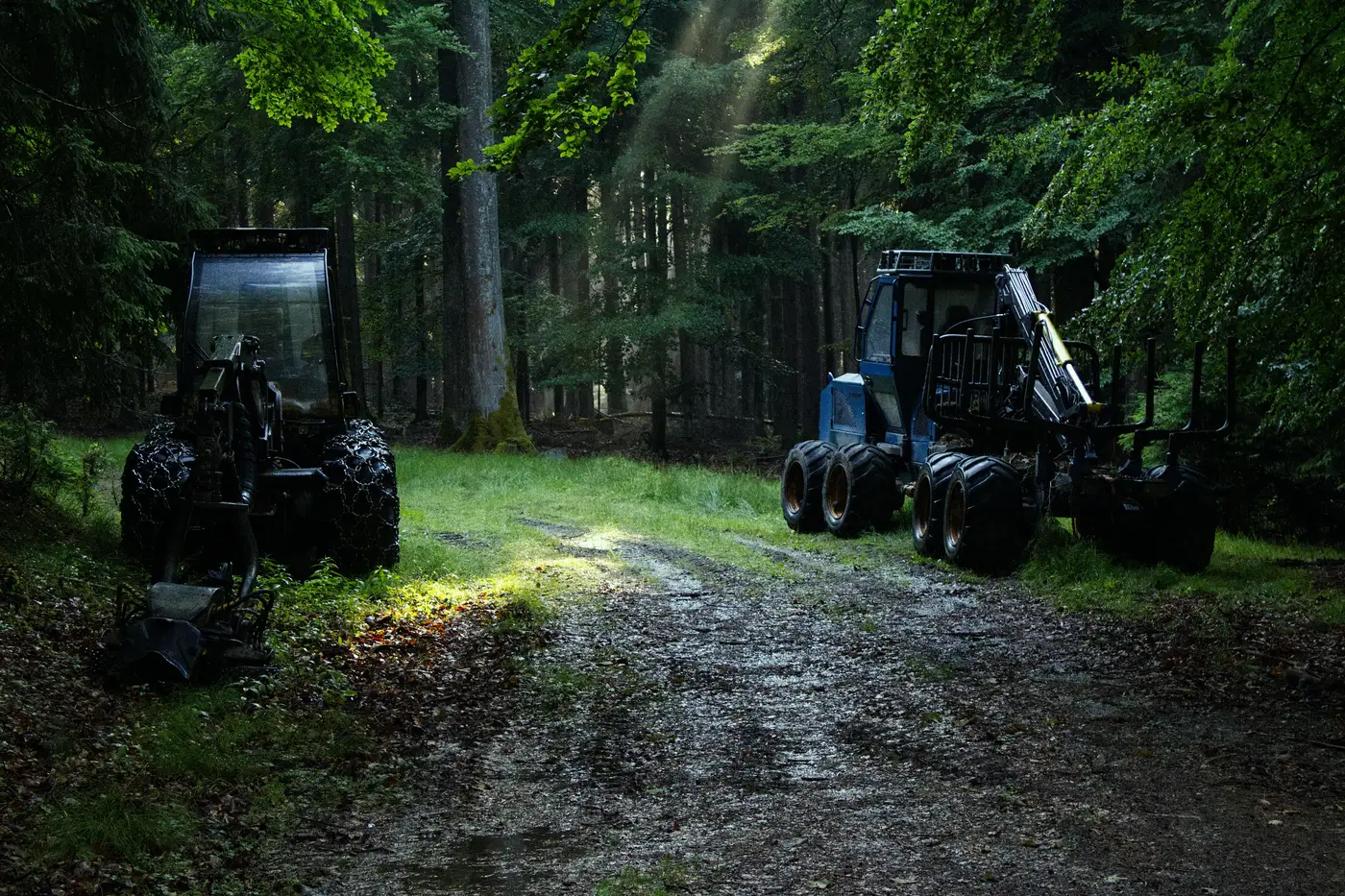
A sales rep asked me this after a flyover review turned up a landing he couldn't make sense of: tree-length stems stacked one way, a slash pile that didn't match what he expected for a cut-to-length job. He wanted to know if he could zoom in and just see which attachment was running. Short answer: no, and anyone telling you otherwise is selling you something that doesn't hold up once you look at the pixels.
Why the attachment itself is invisible
A processor head is maybe a meter and a half long. A delimber knife gate is smaller still. Even at 0.5 m GSD, the best resolution you'll realistically get on a monthly VHR pass, a single pixel covers more ground than the whole working end of either tool. You're not resolving feed rollers, delimbing knives, or a measuring wheel at that scale. Anyone who claims they can pick out a processor head's saw bar from a satellite pass is describing a capability that doesn't exist at commercial VHR resolutions. Drone footage at a few centimeters per pixel can get you there; a monthly satellite product covering a whole operating area can't.
What you can resolve is the machine itself: the boom, the carrier, the general silhouette. A dedicated cut-to-length harvester reads differently than an excavator with a long-reach boom. A forwarder's bunk and wheelbase look nothing like a skidder dragging tree-length stems. That's attribution at the machine level, and it's real. The attachment riding on the end of that boom is not.
How crews read the landing instead
Since you can't see the head, you read the landing. This is the same trick a scaler or a buyer does from a truck window before they've even walked the deck.
Tree-length stems piled at the landing, with limbs and tops still on, tell you the delimbing is happening at the road, not in the stand. That's a tree-length system: feller-buncher or chainsaw crew in the woods, skidders dragging whole stems out, and a stroke boom delimber or slasher working the deck. You'll often see a second pile nearby, the slash and limb debris stripped off at the landing rather than scattered through the cutblock.
A cut-to-length operation looks different from the first pass of the imagery. Sorted log decks in uniform lengths sitting close to the stump rows mean a harvester head already delimbed and bucked the tree where it fell. The forwarder carried merchantable wood straight to the landing, so the deck shows clean, graded piles instead of a jumble of tree-length stems. Slash stays scattered through the block rather than concentrated at the road.
Neither read tells you "processor head" versus "harvester head" specifically, since both do the same job from an excavator-mounted or purpose-built carrier and look the same in a top-down frame. What the landing pattern does tell you is which logging system a contractor is running, tree-length or cut-to-length, and that's usually the detail that matters most for an equipment call. A contractor running tree-length with a stroke delimber at the landing is a different prospect than one running a cut-to-length harvester-forwarder pair, and you can tell them apart from the deck layout alone, no attachment ID required.
If what you need isn't the brand of knife gate on a processor head but a straight answer to where crews are cutting right now and what's parked on site, that's the gap a monthly cutblock-level read of active logging operations is built to close: fresh cut blocks, landings, and machine counts by type, pulled from imagery rather than whatever a permit filing says.
Next time a block's deck pattern doesn't match what the contractor told you, pull up the imagery and let the landing tell you which system is running.