How many harvesters does a logging contractor run?
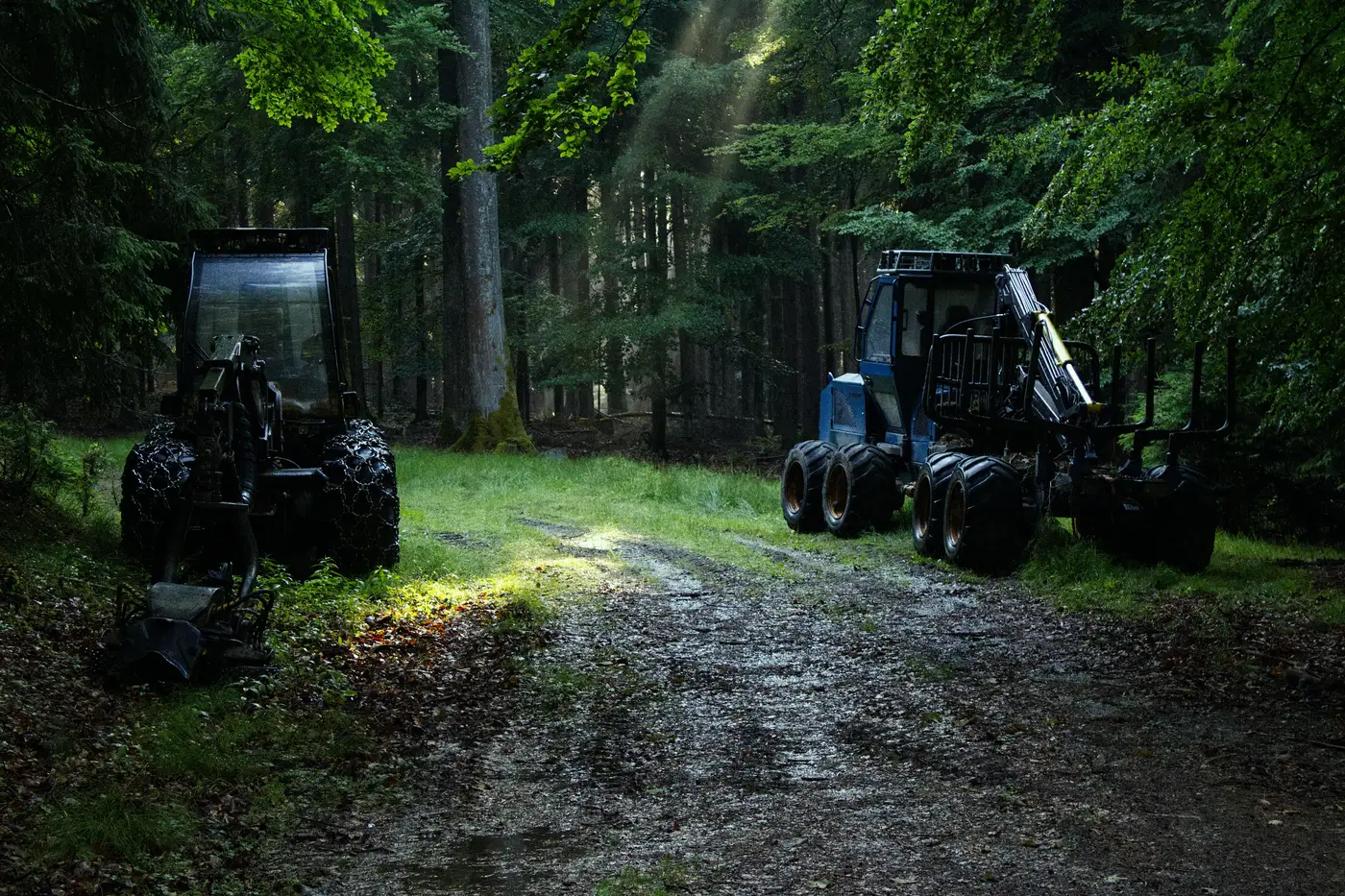
Ask ten contractors how big their fleet is and you'll get ten different answers, because the honest answer is "it depends on the block." But if you're trying to size up a territory, or figure out who's got iron working this month versus who's parked, it helps to know what a normal crew looks like before you go hunting for the outliers.
The baseline: one harvester, one or two forwarders
Most cut-to-length (CTL) crews in North America run a single harvester paired with one forwarder, sometimes two if the haul distance to the landing is long or the ground is soft and slow. That's the core unit. A harvester that's cutting and processing faster than the forwarder can clear the wood just backs up inventory in the bush, so contractors size the forwarder count to match extraction speed, not the other way around.
A single-harvester crew with one forwarder is a two-machine operation, and for a lot of small-to-midsize contractors, that's the whole fleet. They might own a second forwarder as a spare or for peak season, but it's sitting on a trailer more than it's running. If you're counting active units in a block and you see two machines working a cutblock, that's not a reduced crew. That's standard.
Bigger outfits running two or three harvesting fronts at once will scale up from there, three to five harvesters and a matching spread of forwarders, but they're usually splitting that fleet across multiple active cutblocks rather than stacking it all in one. So a contractor's total equipment count and what's running in any single block are two different numbers, and the gap between them is exactly what a permit or a contract document won't tell you.
Whole-tree crews run a different ratio
If the operation is whole-tree instead of CTL, the harvester-to-forwarder math doesn't apply the same way. A feller-buncher drops stems, a skidder drags them to the landing, and a loader or delimber processes them roadside. That's typically a three-machine crew: buncher, skidder, loader, sometimes two skidders if the skid distance is long. There's no "harvester count" in the CTL sense, because the felling and processing happen in separate steps with separate iron.
This matters if you're trying to estimate fleet size from a distance, because a five-machine count in one block could mean a big CTL crew or two whole-tree crews working adjacent cutblocks. The system a contractor runs, CTL or whole-tree, changes what "normal" looks like more than the size of the contract does.
Why the number on the ground rarely matches the number on paper
Stumpage permits and harvest plans describe volume and boundary, not equipment. A contractor can hold a permit covering several thousand cubic meters and still be running one harvester-forwarder pair on it for months, or they can pull a second crew in for three weeks to hit a deadline and pull it back out. Contractors also shuffle machines between active fronts as blocks open and close, so the crew working a given cutblock in March isn't necessarily the same count that was there in January.
Tracking who's cutting and with how much iron means watching the block itself, because the paperwork only tells you what's permitted.
Forestry Machine Census was built around that gap. It reads fresh imagery over active cut blocks and roadside landings each month and counts the harvesters and forwarders actually working them, by type, so you're looking at machine counts tied to real activity instead of a permit that might be months stale. If you're trying to keep a running picture of fleet size and crew movement across a region without driving every haul road yourself, that's what the monthly pass on the home page is built to give you.