Hot logging vs. cold decking: what's the difference?
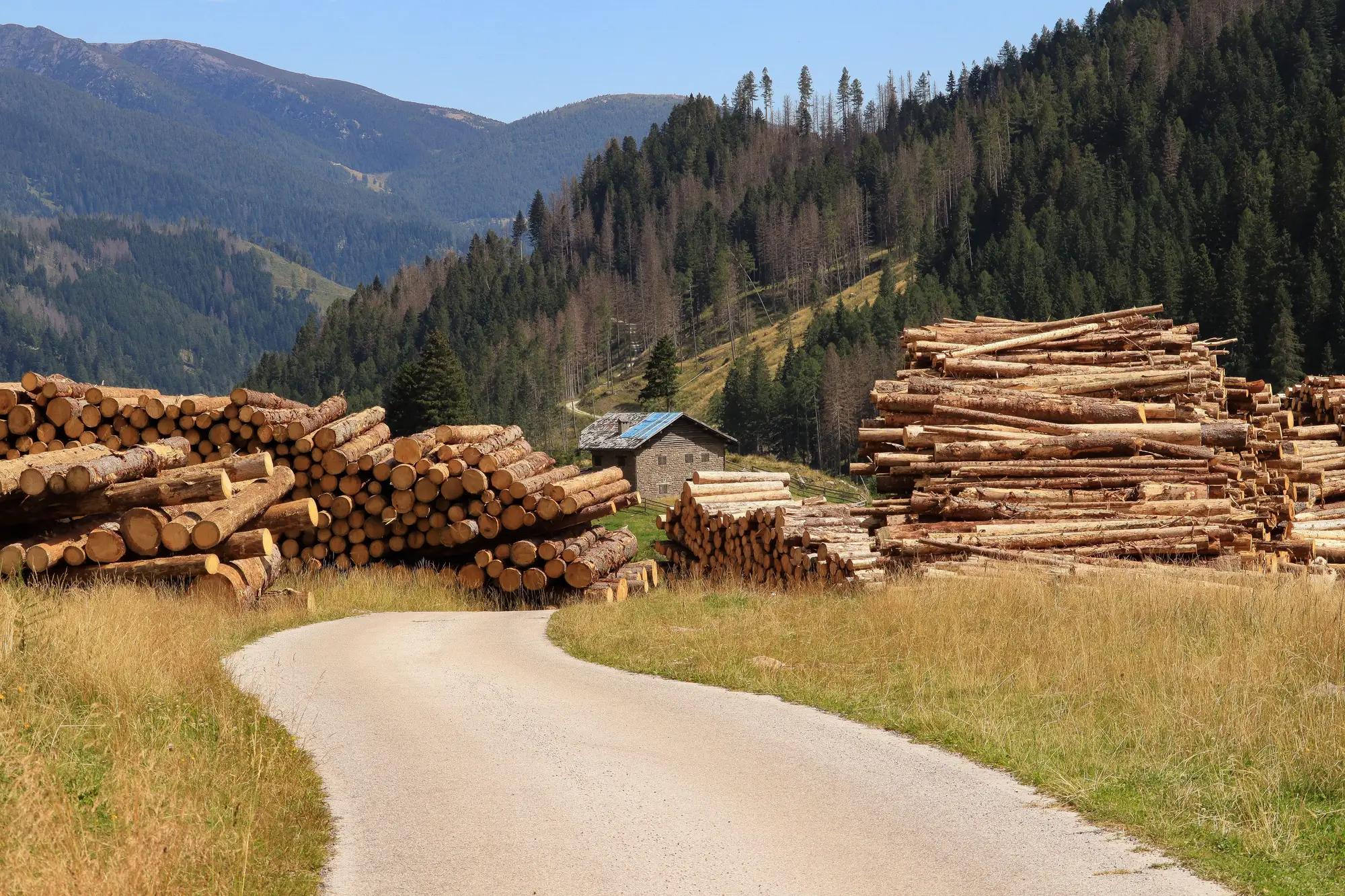
Ask two loggers what "hot logging" means and you'll get the same answer from both. Ask them about cold decking and the answer runs longer, because there's more going on at the landing than the term suggests.
What hot logging means
Hot logging is wood moving continuously from the stump to the mill with no stop in between. The feller buncher or harvester drops trees, the skidder or forwarder brings them to the landing, and the haul trucks load and roll the same day, sometimes the same shift. Nothing sits. There's no deck building up at the landing because there's no need for one. The operation is sized and scheduled to match mill intake, so the crew cuts to the truck count, not the other way around.
This is the setup you see when a mill is running short on inventory or a contractor is working against a tight delivery window. It keeps machine utilization up because the harvester and forwarder aren't waiting on anything downstream. It also means the whole show stops if a truck breaks down, the mill yard fills, or the road turns to soup. Hot logging has no buffer built in.
Cold decking and why crews build inventory
Cold decking is the opposite approach: cut now, pile at the landing, haul later. The deck grows through the week, sometimes through the month, and trucks pull from it on their own schedule instead of running behind the harvester. A cold deck gives a contractor room to keep cutting through a stretch of bad hauling weather, a mill shutdown, or a market where log prices make it worth holding wood for a better price window.
The tradeoff is capital sitting on the ground. A big cold deck is wood that's been cut, skidded, and merchandised but not paid for yet. Some operations run cold decks because they have to, split-season access where the ground's only firm enough to cut in winter but trucking runs better in summer. Others run them because the harvesting crew and the hauling crew are different outfits on different clocks, and decking is how you decouple the two without idling a feller buncher waiting on trucks that belong to somebody else's dispatch board.
Reading deck inventory at a cutblock
For anyone sizing up an operation from the outside, the landing tells you more than the cutblock does. A hot-logging show has a lean landing: maybe a day's worth of logs staged for the next load, a forwarder running steady, trucks cycling in and out. A cold-decking operation stacks up, rows of logs by species or length, sometimes two or three decks deep, and the truck traffic is lighter relative to the cutting pace.
That difference matters if you're trying to figure out how many machines a contractor has running versus how many they're permitted for, or whether a crew that looks active on paper has pulled out. A permit tells you where a contractor is allowed to cut. It doesn't tell you whether the harvester's parked in the yard this month or whether there's a forwarder and a second skidder working a block nobody called in. Deck size and landing activity, read from current imagery, say more about what's actually happening on the ground than a quota report filed last quarter.
That's the gap Forestry Machine Census is built to close: a monthly read on which cutblocks have cutting iron working them and how many harvesters and forwarders are on each one, pulled straight from fresh imagery instead of secondhand permit data. If you sell into this trade and need to know who's cutting and where, that's worth a look.