Cut-to-length vs full-tree logging: what the landing tells you
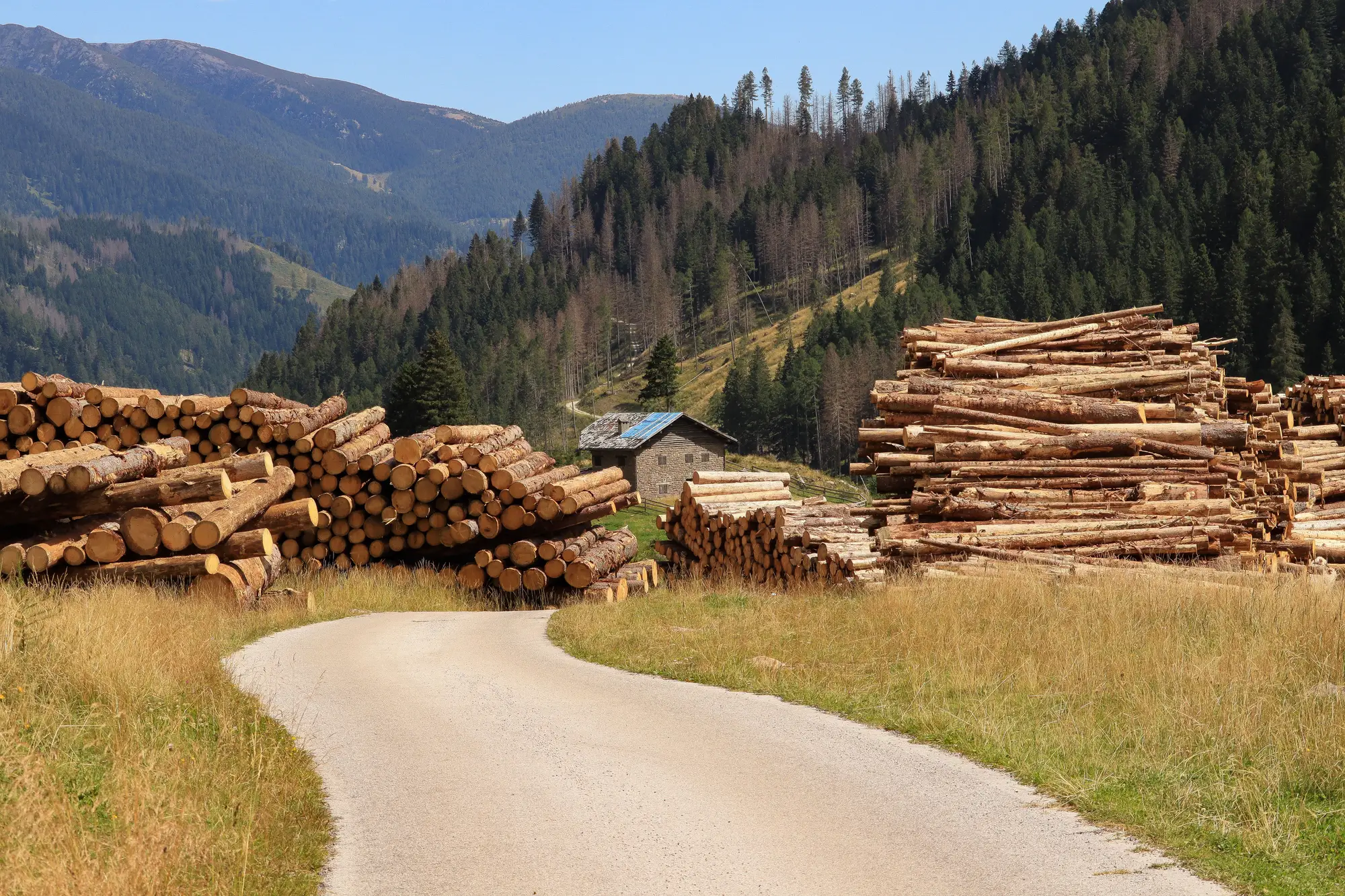
You can argue about harvest systems all day on the phone with a contractor, or you can just look at the landing. The deck, the slash pile, the machine shapes parked at the edge of the block all tell you which system is running before anyone picks up.
What a CTL landing looks like from above
Cut-to-length crews process the tree at the stump, so the landing is doing a different job than it is on a full-tree show. You're looking for short, uniform log decks sorted by length and sometimes by product, pulp on one side, sawlogs on another, stacked in runs that look almost machine-stamped because they were. There's comparatively little slash at the landing itself. Most of the limbs and tops stay back in the block where the harvester dropped them, so a CTL cutblock often reads as cleaner at the deck and messier in the stand, the opposite of what you'd expect walking it on foot.
Full-tree systems flip that. Whole stems come out of the block with limbs and tops still attached, so the landing is where all the processing happens. You'll see a big slash pile building up fast, tree-length stems decked in long rows, unsorted until bucking happens at the landing itself, and more ground disturbance right at the deck from the extra handling. If you're trying to eyeball tree-length decking versus CTL sorts from a monthly pass, the slash volume at the landing is usually the fastest tell. CTL decks look tidy with slash scattered in the block; full-tree decks look busy with slash piled right where the trucks load out.
Processor vs delimber: reading the machine, not just the pile
Machine count tells you crew size, but machine type at the landing tells you the system, and that's where sales reps get the most mileage out of a monthly scan. A stroke delimber at a full-tree landing is a long, low machine working tree-length stems as they come off the skidder or forwarder, usually parked at a fixed station near the slash pile with stems feeding through it lengthwise. A processor, by contrast, is more often found working the block itself on a CTL show, or stationed at roadside on a mixed operation, bucking and sorting as it goes rather than just stripping limbs off whole stems.
A contractor running full-tree with a delimber at the landing is a different parts and service conversation than a CTL outfit running two processors and a forwarder. One wears out delimber knives and chain on high-volume stem throughput; the other puts hours on harvester heads and forwarder bogies. If you can tell from the imagery which setup is active in a given block, you know which conversation to have before you dial the number.
Roadside landings add one more wrinkle. A pure roadside processing setup, tree-length stems trucked whole and bucked at a central yard rather than in the block, can look like full-tree logging from the air even on a crew that's technically running CTL further upstream. The tell there is usually volume: a roadside deck handling multiple blocks' worth of stems is bigger and busier than a single cutblock's landing would produce on its own, and the machine mix tends to include a loader doing double duty that you won't see on a straight in-block CTL operation.
Walking the block still tells you more than any image will. A monthly pass across a region adds something a single site visit can't: the landing signs on every active crew at once, not just the one you drove past. Most reps already know whether a contractor runs CTL or full-tree in general. What's harder to track is which system is running, where, this month. Forestry Machine Census builds that list by scanning fresh cutblocks and landings and counting the harvesters, forwarders, processors, and delimbers working each one.
If you're trying to match your sales calls to what's active on the ground this month, that's worth a look.